
 by
by 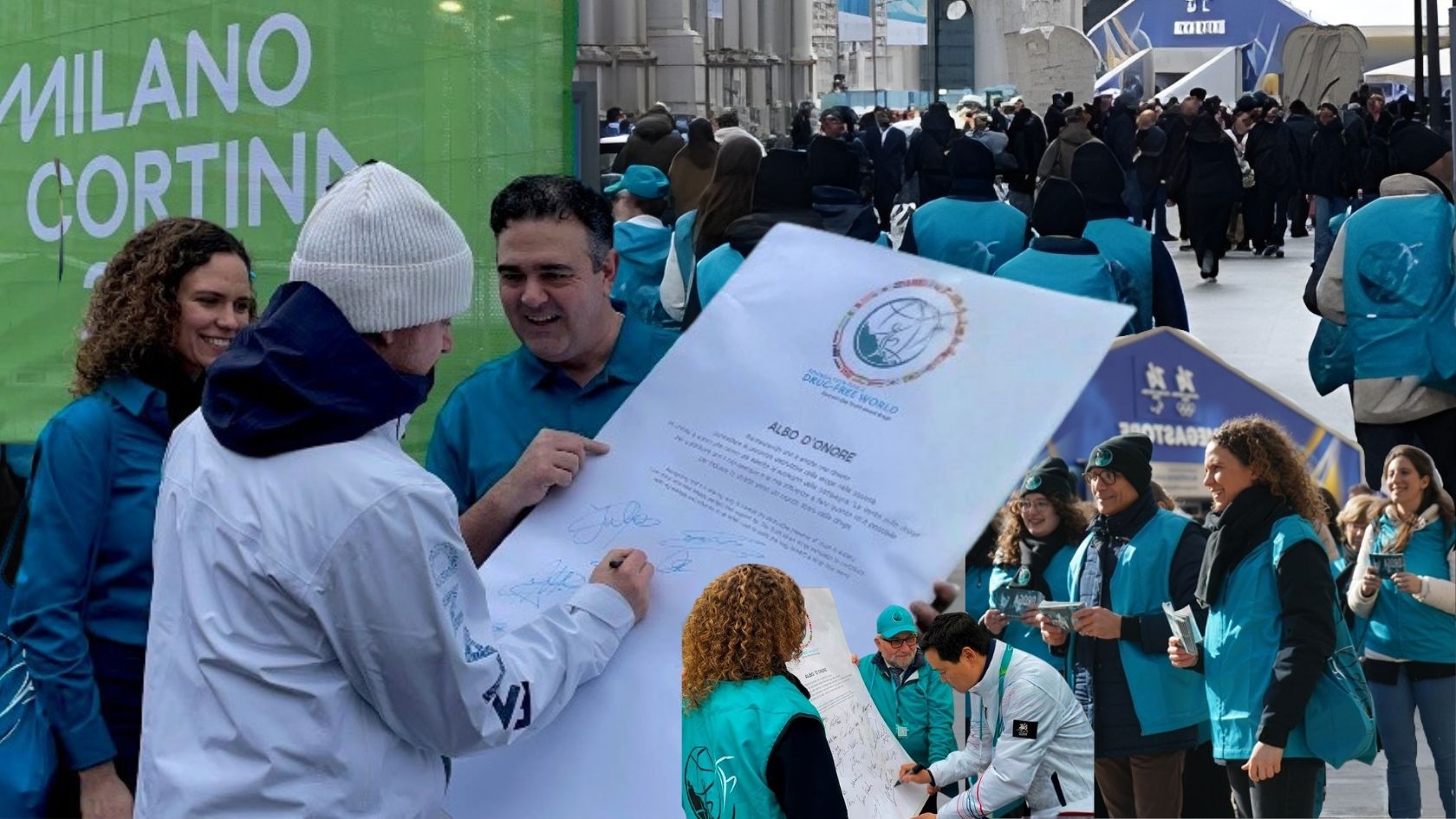
MILAN, Italy — 12 February 2026 — A volunteer network of around 300 people (and increasing) has been active since January in a nationwide drug-prevention initiative in Italy, distributing educational materials titled “The Truth About Drugs”. Reports show that more than 500,000 informational booklets have already been handed out, with Milan leading the effort and additional Italian cities increasingly involved.
The outreach is supported by the European Office of the Church of Scientology as part of its long-running backing for community-based drug education and prevention initiatives inspired by L. Ron Hubbard.
The campaign is a prevention-through-information effort: providing clear, accessible explanations of commonly abused substances, their short- and long-term effects, and the risks to physical and mental health. The aim is to place fact-based information in everyday settings—streets, public areas and community environments—so that teenagers and families can recognise risks early and make informed choices before a first “experiment” becomes a habit.
The booklets, published under the “Truth About Drugs” programme, describe different substances in circulation and the harms they can cause. Many volunteers have witnessed that the materials are written to be understood without specialist knowledge and are used as conversation starters—particularly where young people may face peer pressure or encounter misleading narratives that minimise risk.
Across Europe, prevention is frequently discussed not only as a health policy issue but also as a social one: drug markets often thrive by targeting vulnerability, normalising first use, and drawing adolescents into cycles of dependence and exploitation. In this context, organisers argue that community-level distribution of verified information supports youth safeguarding and strengthens social resilience—especially when it helps teenagers identify manipulation and resist pressure.
Athletes and prevention messaging: sport as a symbol of healthy choices
Organisers also point to growing athlete participation in the outreach. Julie Delvaux, a Belgian volunteer who has been helping, stated that more than 100 athletes connected to the Milano Cortina 2026 Winter Olympics have signed the Foundation for a Drug-Free World’s Honorary Register, signalling support for drug-prevention messaging aimed at youth.
In a broader policy context, European Parliament Vice-President Antonella Sberna highlighted the importance of sustained investment in grassroots sport and civic participation during a European Parliament debate in Strasbourg on 6 October 2025: “European policies must continue to invest in local sports infrastructure, volunteering and the participation of young people and women.(English translation)” Organisers say the campaign’s reliance on local volunteers and youth engagement reflects that same emphasis on community-level involvement.
In the organisers’ framing, sport provides a natural platform for prevention conversations because it is closely associated with discipline, performance, recovery, mental focus and long-term wellbeing. Volunteers add that athletes’ willingness to be publicly associated with prevention messaging can help counter the idea that drug use is “normal” or consequence-free—particularly for young people who look to elite sport as a reference point for healthy living.
One of the most intensive distribution days took place on 6 February 2026, the date of the Milano Cortina 2026 Olympic Opening Ceremony. Around 100 volunteers gathered and distributed over 100,000 booklets in a single day, leveraging the concentration of visitors and public attention in the city.
Distribution launched in January and has now surpassed 500,000 booklets. This as the early phase of a longer-term programme that will continue over the coming months, with volunteers maintaining a presence in multiple cities and expanding into additional neighbourhoods as local capacity grows.
Recent reporting underscores why prevention remains a persistent policy concern. A Reuters report (25 June 2024), based on an annual government report to Italy’s Parliament, stated that 39% of Italians aged 15 to 19 had consumed illegal substances at least once. The same report noted figures on youth exposure to cocaine and cannabis-related products and described trends returning toward pre-pandemic levels.
For readers seeking original documentation, Italy’s official reporting on the drug phenomenon is published through the national anti-drug policy structures; an English-language version of the annual report to Parliament includes data and context on youth patterns and substance categories.
At the European level, wider monitoring points to shifting patterns among younger teenagers, even as risks remain significant and uneven across countries. The EU Drugs Agency (EUDA) overview of the latest ESPAD survey results highlights longer-term trends among 15–16-year-old students across participating European countries, illustrating how prevention strategies must adapt to changing behaviours and new risks.
Organisers’ perspective: prevention as disruption of the first step
In statements circulated in connection with the Italian campaign, Foundation for a Drug-Free World Executive Director Jessica Hochman argues that drug markets depend on first use becoming normalised and repeatable. She frames prevention as the most direct way to disrupt that pathway: when young people understand what drugs do to the body, she says, curiosity often diminishes. (See: the campaign statement distributed via PR Newswire.)
The focus is not on moralising, but on making information available in a form that young people will read. The objective is to reduce the space in which myths thrive—particularly myths that portray drugs as a harmless experiment rather than a pathway into health damage, dependency and, in some cases, criminal exploitation.
The initiative is prompted by the Foundation for a Drug-Free World, a non-profit public benefit organisation (recognized the UN ECOSOC with consultative status) that produces and distributes factual drug-education materials. In its published programme description, the Foundation states that, through a worldwide network of volunteers, 100 million drug prevention booklets have been distributed, with drug awareness events held in some 180 countries, and public service announcements aired by numerous broadcasters.
Organisers of the Italian outreach say that this infrastructure—standardised materials, translations and volunteer coordination—supports rapid scaling when local communities decide to prioritise prevention. They also emphasise that the Italian effort is designed to be practical: short, repeatable distribution activities, paired with materials that can be used by families, educators and community groups as reference points.
The support from the Church of Scientology has helped make the educational materials widely available. Within Scientology’s public accounts of its community work, drug education is visible as part of a broader set of social and humanitarian initiatives inspired by L. Ron Hubbard, the founder of Scientology.
In that framework, local volunteer distributions are presented as one element of ongoing community activity—alongside other prevention and education initiatives—intended to strengthen neighbourhood-level support systems and reduce the harms associated with illicit markets.
Public health, youth safeguarding and social resilience: a European civic lens
According to church representative Ivan Arjona, “drug prevention is not simply a matter of individual behaviour but also one of social environment. Illicit drug markets frequently intersect with violence, recruitment, intimidation and forms of coercion that can pull teenagers into harmful networks”. In that context, “accessible information is a protective tool: it supports informed choice, reduces the likelihood of first use, and can help communities limit the space in which exploitation takes root”.
Arjona, the Church of Scientology’s representative to the European Union, OSCE, the Council of Europe and the United Nations, connected the initiative to European civic priorities such as protecting young people, strengthening social cohesion, and resisting criminal exploitation:
“Across Europe, protecting young people is not only a health objective but a civic duty. Drug markets thrive where vulnerability can be exploited and where misinformation lowers the perceived risk of ‘trying’. Providing verified, understandable information strengthens autonomy and informed choice, and it helps communities reduce the social space in which criminal networks operate.”
Distributions will continue in additional Italian cities over the weeks ahead, with volunteers maintaining a focus on public spaces and community settings where young people can be reached with straightforward, factual materials.
The Church of Scientology, its churches, missions, groups and members are present across the European continent. Scientology has a continent-wide presence through more than 140 churches, missions and affiliated groups in all the 27 European Union nations and more, alongside thousands of community-based social betterment and reform initiatives focused on education, prevention and neighbourhood-level support, inspired by the work of Scientology founder L. Ron Hubbard.
Within Europe’s diverse national frameworks for religion, the Church’s recognitions continue to expand, with administrative and judicial authorities in Spain, Portugal, Sweden, the Netherlands, Italy, Germany Slovakia and others, as well as the European Court of Human Rights, having addressed and acknowledged Scientology communities as protected by the national and international provisions of Freedom of Religion or belief.
Media Contact
Organization: European Office Church of Scientology for Public Affairs and Human Rights
Contact Person: Ivan Arjona
Website: https://www.scientologyeurope.org
Email: Send Email
Address:Boulevard de Waterloo 103
City: Brussels
State: Brussels
Country:Belgium
Release id:41341
The post 300 Scientology Volunteers Distribute 500,000 Drug-Prevention Booklets during Winter Olympics appeared first on King Newswire. This content is provided by a third-party source.. King Newswire makes no warranties or representations in connection with it. King Newswire is a press release distribution agency and does not endorse or verify the claims made in this release. If you have any complaints or copyright concerns related to this article, please contact the company listed in the ‘Media Contact’ section
Disclaimer: The views, suggestions, and opinions expressed here are the sole responsibility of the experts. No House Loan Guide journalist was involved in the writing and production of this article.
